.png)

.svg)



Ad creative optimisation is the systematic, data-driven process of testing, analysing, and refining advertising visuals and messaging to maximise performance metrics such as click-through rate (CTR), return on ad spend (ROAS), and cost per acquisition (CPA). It is the discipline that separates brands that scale paid advertising profitably from those that burn budget on gut-feel creative decisions. Platforms like Meta Advantage+, Google Performance Max, and AI tools like Omneky have made this process faster and more precise than ever. Understanding how it works, and how to apply it, is now a core competency for any marketing professional managing paid campaigns in 2026.
What is ad creative optimisation and how does it work?
Ad creative optimisation is the structured practice of continuously improving every element of an ad, from the opening hook to the call to action, based on real performance data rather than creative instinct. The industry also refers to this as Dynamic Creative Optimisation (DCO) when automated systems serve and test combinations at scale. Both terms describe the same underlying discipline: treat creative as a variable to be engineered, not a one-off production task.

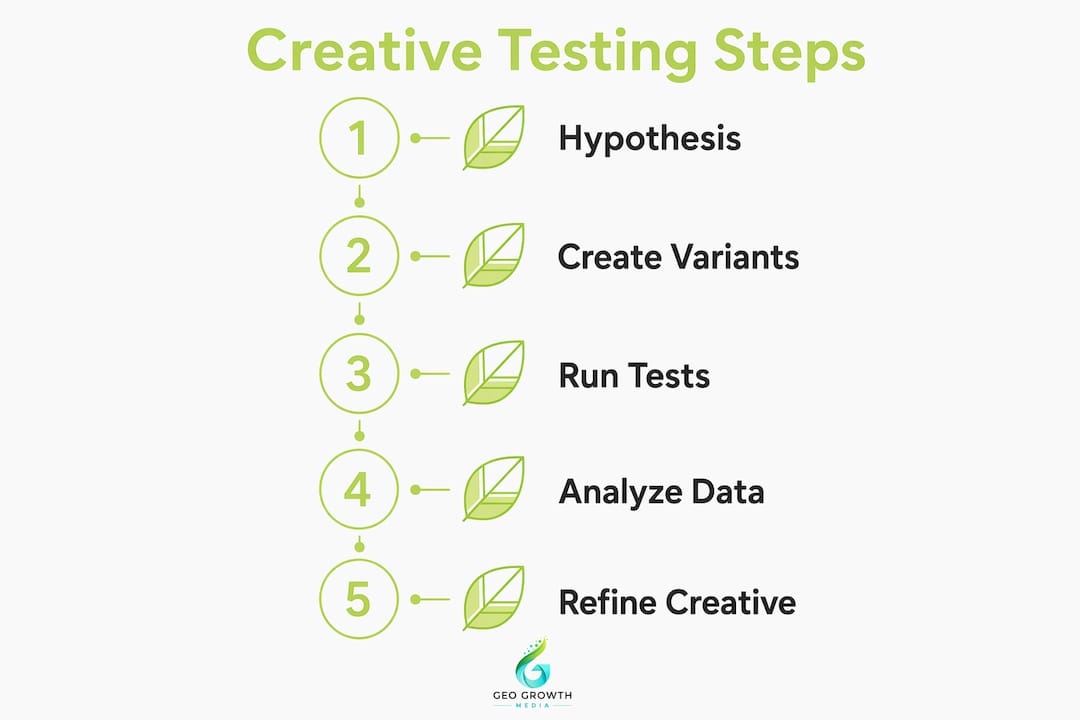
The process follows a continuous loop. You form a hypothesis, produce variants, run them against a defined success metric, analyse the results, and feed those learnings back into the next brief. This is not a quarterly exercise. It is a weekly, sometimes daily, operating rhythm. Brands that treat creative as engineering rather than art are the ones that consistently scale past test budgets.
Creative quality accounts for 56% of Meta auction outcomes, outweighing bid strategy, targeting, and placements combined. That single figure reframes where your optimisation effort should go. Most marketers spend the majority of their time adjusting audiences and bids. The data says the creative itself is the bigger lever.
How does ad creative optimisation differ from traditional creative processes?
Traditional creative processes rely on a small number of variants tested over a long period. Manual testing typically covers 5 to 10 ad variations over two to four weeks, whereas AI-powered systems can test 50 to 200 variations simultaneously with results in days. That is not a marginal improvement. It is a fundamentally different operating model.
The core difference lies in the architecture of the creative itself. Winning ad production uses a modular structure: hook, body, proof, offer, and CTA are built as independent components that can be tested and recombined. This means a single production run can generate dozens of testable combinations without commissioning entirely new creative each time. It accelerates velocity and compounds learning across campaigns.
Here are the key variables most commonly tested within this modular framework:
Pro Tip: When starting out, resist the urge to test everything at once. Isolating one variable per test is the only way to know what actually moved the needle. Testing multiple variables simultaneously produces ambiguous results that waste time and budget.
Which creative elements most influence ad performance?
The hook is the gating mechanism for everything else in your ad. If the first two seconds do not stop the scroll, the offer, proof, and CTA are irrelevant. Hook rates below 20% on Meta generally fail to gather sufficient distribution regardless of how strong the offer is. A 30% or higher hook rate is the benchmark worth targeting before you move on to testing other elements.
Platform-specific creative requirements add another layer of complexity. Meta users are passive scrollers who need a strong two-second hook to interrupt their feed. TikTok users are actively consuming content and expect value delivery within five seconds. Google Performance Max requires a different brief entirely, with emphasis on headline combinations and asset group diversity. Treating these platforms as interchangeable is one of the most common and costly mistakes in paid advertising.
A practical testing priority order looks like this:
Creative elementPrimary metric to watchTesting priorityHookHook rate (% watching 3+ seconds)FirstFormatCTR, CPMSecondMessaging angleCTR, conversion rateThirdOffer framingCPA, ROASFourthCTAClick-through rateFifth
Pro Tip: Build platform-specific creative briefs rather than adapting one brief across channels. A brief written for Meta should reference the two-second hook rule explicitly. A TikTok brief should specify native-style filming and on-screen text within the first five seconds. The brief is where platform behaviour gets baked into production.
How do structured creative testing frameworks drive scaling success?
A structured framework removes the subjectivity from creative decisions and replaces it with a repeatable system. Without one, you are essentially running a series of disconnected experiments with no compounding value. With one, every test adds to a growing body of knowledge that makes the next brief smarter.
The four pillars of a reliable creative testing framework are:
Allocating 15 to 20% of total ad budget to creative testing is the operational standard for brands running consistent learning loops. This is not an optional extra. It is the cost of staying competitive in an auction environment where creative exhaustion is the primary cause of ROAS decay, not audience saturation or bid competition.
Creative fatigue is a practical constraint that frameworks must account for. Performance declines after frequency exceeds 3 to 4 on Meta, and refreshing creatives every 7 to 14 days extends effectiveness. For medium to large spenders, producing 6 to 8 new concepts biweekly is considered best practice.
ApproachTesting speedLearning qualityScalabilityManual, ad hoc testingSlow (2 to 4 weeks per cycle)Low (variables mixed)PoorStructured framework, manualModerate (1 to 2 weeks per cycle)High (variables isolated)GoodAI-powered with frameworkFast (days per cycle)High (automated tagging)Excellent
What practical steps help marketers implement creative optimisation?
The gap between understanding creative optimisation and actually running it well comes down to workflow. Most teams have the intent but not the operating system. Here is where to start:
Pro Tip: Build a tagging archive in a shared spreadsheet or project management tool like Notion or Airtable. Tag every creative with hook type, format, angle, and outcome. After three months, you will have a pattern library that writes better briefs faster than any individual’s memory can.
You can also explore a paid advertising workflow guide to see how creative review cadences fit into broader campaign management systems.
How platforms score your creative quality
Understanding how digital platforms evaluate your creative assets is not optional knowledge. It directly affects whether your ads win impressions at a competitive price.
Google Ads uses a metric called Ad Strength for Responsive Search Ads and Performance Max campaigns. It evaluates three things:
Ad Strength is not the same as Quality Score. Quality Score reflects keyword relevance and expected CTR in search. Ad Strength reflects creative completeness and variety within responsive formats. Both matter for campaign delivery and auction priority, but they measure different things.
A common mistake is treating asset quantity as the goal. Adding combinations without improving the core persuasive message reduces impact. A high asset count with five variations of the same weak headline is worse than three genuinely strong, distinct headlines. The platform can generate more combinations, but none of them will perform.
Designing for how people actually consume ads
You can have the right message and the wrong format. In 2026, the format is inseparable from performance.
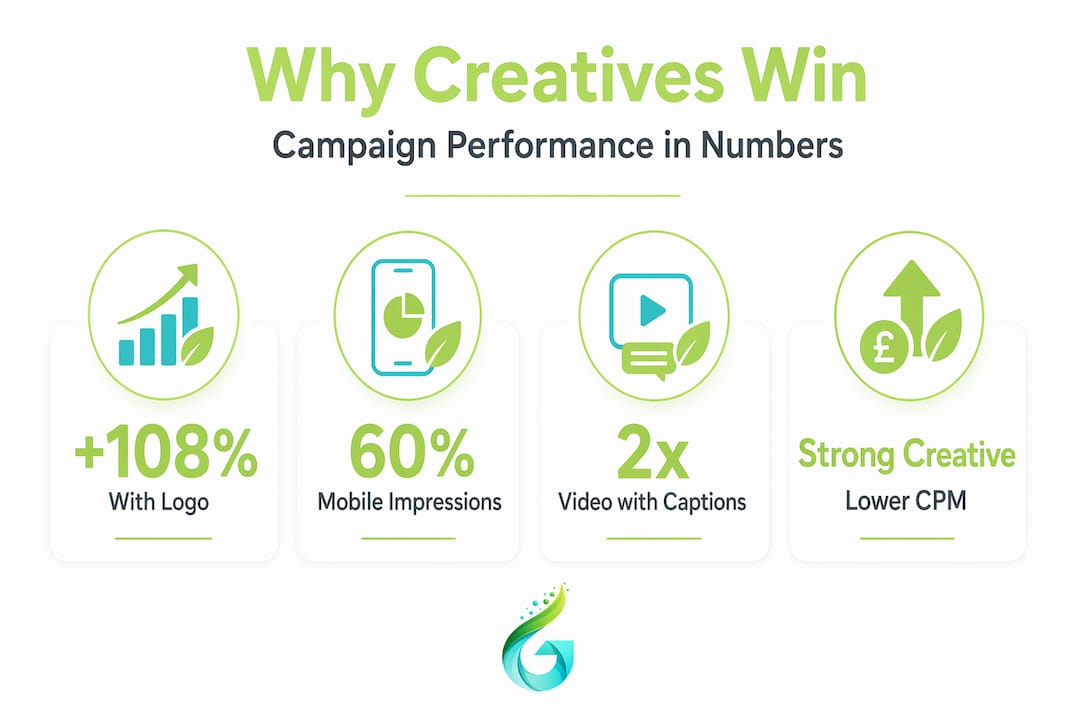
The modern consumer encounters ads in a predominantly mobile, fast-scrolling, often sound-off environment. Designing for desktop first and adapting for mobile is working backwards. Here is what designing for actual consumption looks like:
“Attention is the scarce resource in modern advertising. Your creative is not competing with other ads. It is competing with friends, family, and everything else in the feed.”
For more on the wider performance marketing context, understanding how creative fits into a full-funnel approach helps avoid the trap of optimising creatives in isolation.
How do AI and automation tools transform creative optimisation in 2026?
AI has shifted creative optimisation from a manual, resource-intensive process to a continuous, self-improving system. Platforms like Omneky automate the generation, testing, and analysis of creative variations at a scale no human team can match. Brands using Omneky report 30 to 60% CTR improvements and 32% ROAS gains within 90 days. Those are not marginal gains. They reflect the compound effect of faster learning cycles.
The practical capabilities AI brings to creative optimisation include:
Platform algorithms now outperform manual audience targeting, which means creative is the primary lever advertisers still control. The marketer’s role is shifting from creator to strategist. You set the hypotheses, define the success criteria, and interpret the patterns. AI handles the production and testing volume. Understanding how AI boosts digital marketing performance in this context is now a practical skill, not a future consideration.
Key takeaways
Ad creative optimisation works because creative quality is the single largest controllable variable in paid advertising auction performance, and structured testing compounds learning into a durable competitive advantage.
PointDetailsCreative drives auction outcomesMeta data shows creative quality accounts for 56% of auction results, more than targeting or bids.Test hooks firstHook rate below 20% prevents distribution regardless of offer quality; target 30% or above.Isolate one variable per testTesting multiple variables simultaneously produces ambiguous data that cannot inform better briefs.Budget for testingAllocate 15 to 20% of total ad spend to creative testing to maintain consistent learning loops.Refresh creatives regularlyCreative fatigue sets in after frequency exceeds 3 to 4 on Meta; refresh every 7 to 14 days.
Our honest view on creative optimisation
At Geo Growth Media, we have seen the same pattern repeat across clients in different sectors and at different spend levels. The brands that struggle to scale are almost always the ones treating creative as a production task rather than a testing discipline. They produce one or two ads, run them until performance drops, then scramble to replace them. There is no system, no tagging, no hypothesis. Just hope.
The shift that changes everything is deciding to treat creative like a product development cycle. You build a brief with a specific assumption. You test it cleanly. You document what worked and why. Then you use that knowledge to write a better brief next time. It sounds straightforward, but most teams never get there because they are too focused on volume over rigour.
The other thing worth saying plainly: platform-specific creative is not optional. We have watched well-funded campaigns underperform simply because the creative was built for one platform and repurposed across three others. A Meta static ad repurposed as a TikTok video is not a TikTok ad. The platform behaviour is different, the user expectation is different, and the algorithm will price you accordingly with higher CPMs and lower reach.
AI tools have genuinely changed what is possible, but they do not replace strategic thinking. The marketers getting the most from tools like Omneky are the ones who have already built a testing discipline. AI accelerates a good system. It cannot fix a broken one.
Take your ad creative further with Geo Growth Media
If this article has made you think differently about how your creative is being tested and managed, that is a good starting point. The next step is building the system around it.
At Geo Growth Media, we work as an extension of your marketing team, applying structured creative testing frameworks and data-driven methodologies across Meta, TikTok, LinkedIn, and Google. We do not just run ads. We build the learning loops that make each campaign smarter than the last. Whether you are starting from scratch or looking to scale what is already working, our paid social media services are built around measurable outcomes and continuous creative improvement. Explore our full digital marketing services to see how we can support your growth.
FAQ
What is ad creative optimisation in simple terms?
Ad creative optimisation is the process of systematically testing and improving ad visuals and copy to increase performance metrics like CTR, ROAS, and CPA. It replaces guesswork with a data-driven feedback loop that compounds learning over time.
Why does creative matter more than targeting now?
Platform algorithms on Meta, Google, and TikTok now handle audience targeting automatically and with increasing accuracy. Creative quality drives auction outcomes and is the primary variable advertisers still directly control.
What is creative testing and how often should you do it?
Creative testing is the structured practice of running ad variants against defined success metrics to identify what drives better performance. Reviews should happen weekly, with new creative concepts introduced every 7 to 14 days to prevent fatigue.
How much budget should go toward creative testing?
Industry best practice recommends allocating 15 to 20% of total ad spend to creative testing. This creates a consistent learning loop rather than treating testing as an occasional, optional exercise.
What is the most important element to test first in an ad?
The hook is the highest-priority element to test. If the opening two seconds do not engage the viewer, no other element of the ad will have the chance to perform.


.png)