.png)




.png)

We're act as an extension of your team. Our strategy, your business.


Google Shopping works best when your products are shown to people already looking for exactly what you sell. The problem is that many businesses rely on default settings or an unoptimised feed, which means their products appear in the wrong searches or get buried beneath better-structured listings. By pairing Google Shopping with a well-managed Google Ads strategy, we fix the gaps that hold performance back. We clean up your feed, refine your product data, and make sure your items appear in front of high-intent shoppers

Most Shopping campaigns underperform because they’re left running on default settings. We build campaigns based on tighter targeting, improving product signals, and making sure your budget is spent where buyers are ready to convert.
Learn More.svg)
Your feed is the engine of Google Shopping, and if it’s messy, everything else suffers. We clean up titles, attributes, categories, and missing data so Google knows exactly where your products belong. Better feeds mean better visibility and lower wasted spend.
Learn More.svg)
Shopping is visual, and weak imagery can quietly kill performance. We guide you on the images, formats, and variations that increase clicks and build trust. When your visuals match shopper intent, everything improves - from CTR through to conversions.
Learn More.svg)
You shouldn’t be guessing where sales are coming from. We provide clear, data-led insight into your Shopping performance, highlight the real drivers of revenue, and show you what needs improving.
Learn More
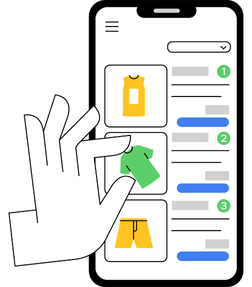
Scalable growth with Google Shopping that’s built on solid foundations
Google Shopping has huge potential, but only when the setup behind it is right. Too many brands try to scale with patchy feeds, vague targeting, and guesswork driving their bidding. We take a more measured approach. By tightening your feed, aligning campaigns with real business data, and building a structure that can grow without wasting spend, your Shopping performance becomes more predictable, more profitable, and far easier to scale. Instead of pushing harder and hoping for the best, we create a framework that supports long-term growth.
.svg)
.svg)
Google Shopping will happily send traffic your way, but if your feed is unclear, your product pages are confusing, or your pricing isn’t competitive, shoppers bounce before buying. We dig into the full journey, from feed data to onsite behaviour. to find where people drop off and why. Then we fix the weak spots so more of the traffic you’re already paying for converts into revenue.


.svg)
Rising CPCs can look terrifying on the surface, but the number alone doesn’t tell the full story. What really matters is whether those clicks are bringing in higher-value customers and stronger returns. We focus on ROI, not panic metrics. By tightening your feed, improving relevance, and pushing your products into more profitable auctions, you can see CPCs rise and still achieve better overall performance. The goal isn’t cheaper clicks - it’s smarter, more intentional ones that make you more money.
Most brands only see top-line results; impressions, clicks, maybe ROAS - but none of that tells you why performance shifts. We give you visibility into the data that matters: which products drive profit, which search terms drain your budget, and where your funnel needs improving. No guesswork, no vague dashboards. Just clear insight that helps you make smarter decisions.

See how businesses like yours are using Google Shopping to drive predictable, profitable growth. Our case studies break down the real results.



Google Shopping is best suited for eCommerce businesses with a defined product range and clear pricing. It works particularly well for retailers competing on visibility, relevance, and trust rather than purely on brand awareness. If customers compare products, prices, and sellers before buying, Google Shopping plays a central role in influencing that decision.
Unlike search ads, Google Shopping is driven primarily by product data rather than keywords alone. Performance depends heavily on feed quality, product structure, and how well items are categorised and described. This makes optimisation more technical and ongoing, with success tied closely to how accurately Google understands each product.
Effective Google Shopping management goes beyond bidding and budgets. It includes product feed optimisation, title and description refinement, category mapping, attribute accuracy, and performance segmentation by product group. These elements help Google surface the right products to the right shoppers at the right moment.
Initial visibility and traffic can appear quickly once feeds are approved and campaigns are live. More consistent performance typically develops over four to eight weeks as product data is refined, underperforming items are filtered, and budget is allocated toward products with proven demand. Long-term gains come from feed improvements rather than short-term bid changes.






.webp)
.webp)
.webp)